
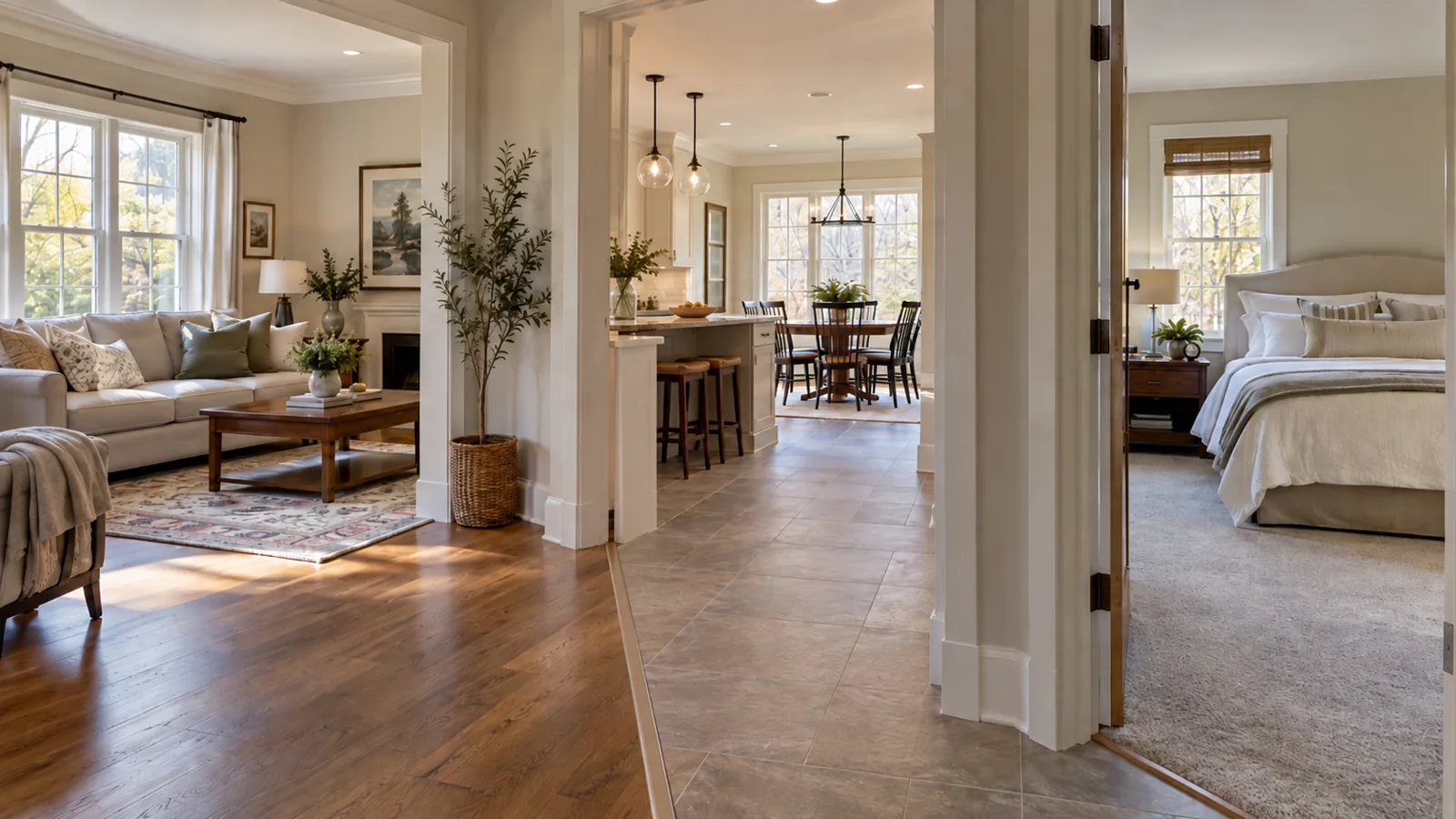
Choosing new flooring is one of those home improvement decisions that looks simple until you’re standing in a showroom facing a hundred samples. The truth is that no single material is “best.” The right choice depends on which room you’re flooring, how it’s used and what you want it to look and feel like five, ten or twenty years from now. This guide walks through how to match flooring material to each room, plus the acclimation, padding and installation details that decide whether your new floor performs the way it should.
Step 1: Map Out Every Room You Plan to Floor
Before comparing materials, list every room in the project and note three things for each: expected foot traffic (low, medium or high), moisture exposure (dry, occasional splashes or standing-water risk) and whether pets or small children use the space regularly. This one planning step prevents the most common flooring mistake: choosing a material for its looks alone and discovering later that it can’t handle how the room is actually used.
Common mistake: Treating a whole-house flooring project as one material decision. Most homes benefit from two or three flooring types used strategically room by room, not a single material throughout.
Step 2: Match Material to Moisture Exposure
Moisture is the single biggest factor in flooring failure, so start here.
- Kitchens, bathrooms, mudrooms and laundry rooms need materials built for spills and humidity: ceramic or porcelain tile, waterproof laminate, luxury vinyl tile or plank (LVT/LVP) and sheet vinyl. Ceramic tile is a long-standing choice here because it’s durable, easy to clean and waterproof.
- Basements are especially demanding. Solid hardwood isn’t recommended below grade because wood absorbs and releases moisture from its surroundings, and the National Wood Flooring Association’s guidelines advise against installing solid wood below grade. Waterproof vinyl, waterproof laminate, ceramic tile or an engineered product designed for the conditions are safer choices. Engineered hardwood’s cross-layered construction makes it more stable against humidity than solid wood.
- Living rooms, bedrooms and dens have the lowest moisture risk, which opens up the full range of options, including solid or engineered hardwood and carpet.
Common mistake: Installing solid hardwood in a bathroom or basement because it “matches the rest of the house.” Even prefinished hardwood can cup, gap or warp where humidity swings are frequent.
Step 3: Match Material to Foot Traffic and Lifestyle
Once moisture is accounted for, layer in how hard the room gets used.
- High-traffic hallways, stairs and family rooms benefit from durable, easy-clean surfaces: engineered hardwood, LVT/LVP, waterproof laminate or a dense carpet over the right padding (more on that in Step 4).
- Households with kids or pets should prioritize stain- and scratch-resistant products. Ceramic tile and waterproof vinyl handle spills and accidents well, and Tom Adams’ waterproof laminate carries both a commercial and a pet warranty. Today’s carpets are also built to resist stains, spills and wear, so ask which products include stain or pet coverage. If you have dogs and want hardwood, see our tips on keeping hardwood floors scratch-free.
- Formal or low-traffic living rooms and bedrooms are where you can prioritize comfort underfoot. This is where a plush carpet or wide-plank solid hardwood earns its keep.
Common mistake: Choosing carpet padding for plushness alone. Thicker isn’t always better: carpet manufacturers specify padding thickness and density, and padding outside those specifications can void your carpet’s warranty.
Step 4: Get the Underlayment and Padding Right
Flooring performance depends as much on what’s underneath as on what’s on top.
- For carpet: Padding gives carpet its support and cushioned feel, and the right density helps prevent premature wear and flattening in traffic paths. Carpet manufacturers recommend a 7/16″ thick, 8 lb density pad. The Carpet and Rug Institute’s installation standard (CRI 105) is the industry reference for details like this. A sales associate can match the pad to your carpet and the room’s traffic.
- For hardwood: Before installation, wood flooring needs to acclimate to the home’s normal temperature and humidity so the boards reach the right moisture content for the space, as the National Wood Flooring Association’s installation guidelines describe. Skipping this step is a common cause of gapping, cupping or crowning after installation.
- For laminate and vinyl plank: Let the planks sit in the room for at least 48 hours before installation so they adjust to its temperature and humidity, and leave an expansion gap at the walls (covered by molding) so the floor can move naturally.
- For tile and vinyl: Subfloor preparation matters more than the finish material. An uneven or damaged subfloor will show through even the most durable waterproof flooring.
Common mistake: Rushing acclimation on a hardwood delivery to save a few days on the schedule. It’s one of the most frequent causes of costly hardwood callbacks.
Step 5: Set Your Budget and Compare Real Product Lines
Once you know the material for each room, get specific about product lines and pricing. Tom Adams carries major manufacturers across every flooring category, including hardwood from Bruce, Mannington, Mohawk and Shaw, and carpet from Shaw, Mohawk, Masland, Stanton and Godfrey Hirst, from builder grade to premium. For a closer look at the main options, see our guide to the best types of flooring for homes. When you compare quotes, ask:
- What warranty comes standard on the product, and what covers the installation labor?
- Is a stain or pet warranty included?
- Does the price include padding or underlayment, removal of the old flooring and moving furniture?
If you’re converting carpet to hardwood, our carpet-to-hardwood cost guide breaks down typical labor rates.
Step 6: Visit a Showroom, Then Schedule a Free In-Home Measurement
Samples look different under showroom lighting than they do in your home. Start by choosing products at a Tom Adams showroom in Churchville, Doylestown or Whitehall, then schedule a free in-home measurement. A flooring measurement specialist uses lasers to measure each room and sends your salesperson a professional drawing with seam placement planned to keep seams out of sight lines and traffic areas. The visit is also a chance to confirm that your subfloor, natural light and room flow suit the materials you picked in Steps 2 through 4. Financing is available, subject to credit approval.
Step 7: Confirm the Installation Warranty Before You Sign
The material is only half the equation. Installation quality decides whether a floor performs for the long term. Before signing, confirm in writing which labor warranty is included separately from the manufacturer’s product warranty, and ask whether it transfers if you sell the home. At Tom Adams, installation warranties vary by product, up to lifetime, and are provided in writing. Most Tom Adams carpets carry an exclusive Tom Adams Lifetime Labor & Installation Warranty. For what to expect on installation day, see how to plan for a successful flooring installation.
Troubleshooting Common Flooring Problems
“My new hardwood floor has gaps between boards a few weeks after installation.”
This is almost always a moisture or acclimation issue. Ask your installer whether the flooring reached the right moisture content for your home, with your heating and air conditioning running normally, before it was installed. Raise it with your installer directly, since it may be a warranty issue.
“My carpet is showing wear patterns or flattening in high-traffic areas within a year or two.”
This usually points to the padding: either the wrong density for the traffic level or a pad outside the carpet manufacturer’s specification. Ask your retailer to check the padding against your carpet’s warranty documents.
“The vinyl or laminate in my kitchen is peaking or buckling at the seams.”
This is typically a subfloor preparation or expansion-gap issue. Floating floors need a small gap at the walls to expand naturally. Confirm the installer left the gap the manufacturer specifies.
“I’m not sure which room should get which flooring, and I don’t want to guess wrong.”
That’s exactly what a showroom visit and free in-home measurement are for. A flooring specialist can walk each room with you and make room-specific recommendations before you commit. Contact Tom Adams to get started.